Commercial food-service sanitation defense establishes biological sovereignty over commercial cooking environments where traditional pest sprays fail. Standard liquid pesticides break down rapidly when exposed to high…
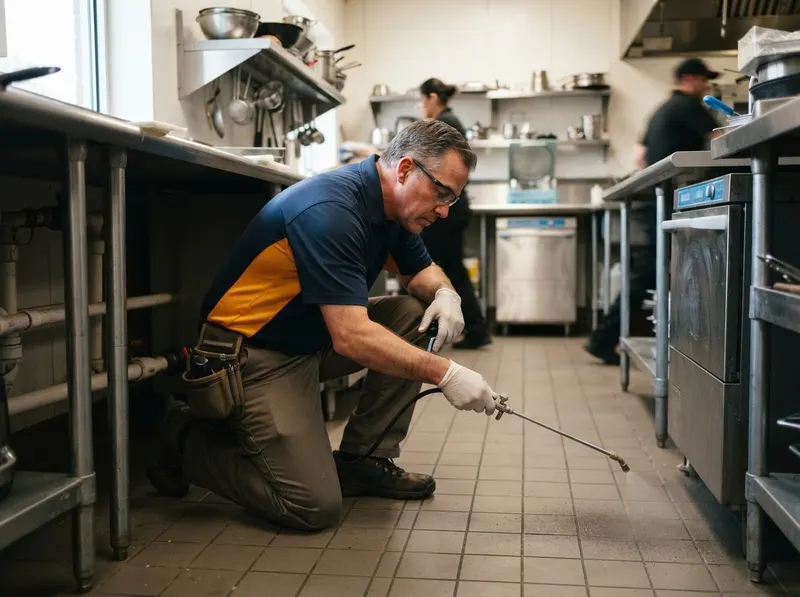
Commercial food-service sanitation defense establishes biological sovereignty over commercial cooking environments where traditional pest sprays fail. Standard liquid pesticides break down rapidly when exposed to high heat, industrial grease films, and hot-water washdowns typical in Dallas restaurants. The sanitation defense protocol replaces generic surface repellents with enzymatic bio-foaming in drainage lines and non-repellent matrix baits placed strictly beneath prep surfaces, stainless steel weld joints, and compressor motors. This methodology removes the biological slime layer inside the initial 4 to 8 feet of plumbing lines, eliminating the substrate where drain flies and phorid flies incubate.
Facility layout dictates the exact defense strategy. In historic brick-and-mortar facilities throughout the Bishop Arts District, East Dallas, and Kessler Park, older subflooring and perimeter plumbing runs require intensive exterior copper mesh packing paired with polyurethane elastomeric sealants along 0.25-inch expansion joints to halt rodent migrations from surrounding alleyways. Conversely, high-volume dining operations in Uptown, Preston Hollow, and North Dallas prioritize micro-encapsulated insect growth regulators (IGRs) combined with low-profile pheromone monitoring boards beneath grease interceptors and walk-in refrigeration units to neutralize cockroach nymphs before adult reproductive cycles occur.
Operational protocols follow a structured sequence. Step 1: Technicians execute a baseline digital moisture, organic load, and harborage audit along the perimeter walls, floor sinks, and cook lines. Step 2: High-pressure probiotic foaming clears all drainage conduits, degrading fatty acids and organic buildup without disrupting municipal wastewater standards or corroding brass piping. Step 3: Technicians apply targeted structural exclusion around gas line wall penetrations, beverage conduit lines, and dock door thresholds. Step 4: Long-residual dry granular baits and non-volatile gel compounds are injected directly into equipment voids away from food-contact surfaces. The trade-off centers on prep downtime versus biological efficacy: bio-foaming requires kitchen surfaces to remain dry for 60 to 90 minutes post-treatment, but it systematically eliminates the root attraction point rather than merely masking active pest activity.
Every job gets a firm, written price after a free on-site visit.
Tell us about your commercial food-service sanitation defense job in Dallas and we'll send a clear, written quote, usually the same day.
 Black Anchor Pest Control