Bed bug infestations inside Dallas County residences require uncompromising structural remediation because Cimex lectularius exhibits documented physiological resistance to standard over-the-counter pyrethroids.…
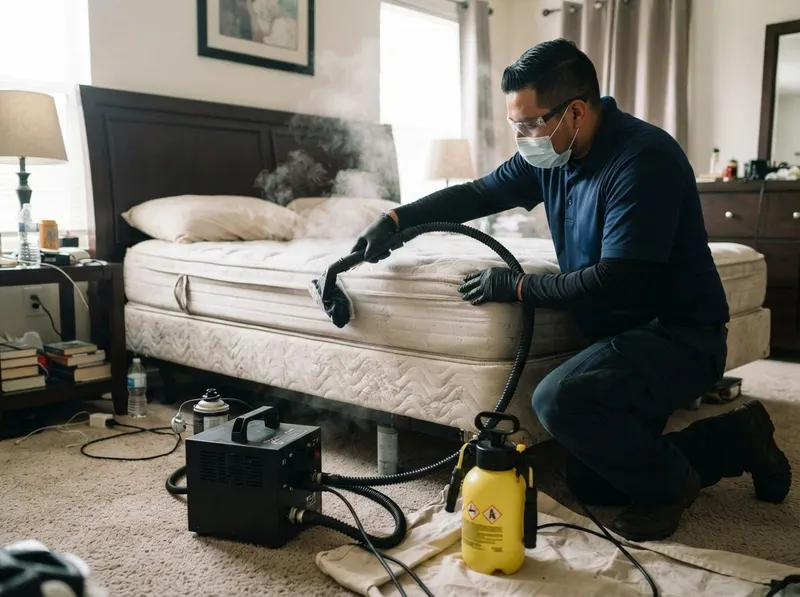
Bed bug infestations inside Dallas County residences require uncompromising structural remediation because Cimex lectularius exhibits documented physiological resistance to standard over-the-counter pyrethroids. Thermal remediation functions by deploying specialized convective heating units that steadily elevate ambient room temperatures between 122°F and 135°F. This range denatures cellular proteins and causes dehydration across all life stages within 90 minutes of continuous exposure, penetrating deep into mattress cores, behind crown molding, and through hardwood flooring gaps. The paired chemical component applies targeted non-repellent residuals and insect growth regulators (IGRs) within wall cavities and subfloor perimeters, providing a lethal barrier against any stray nymphs that might escape outside the thermal zone.
Decision-fit depends on structural density, clutter levels, and infestation severity. Standalone chemical programs require multiple repeat visits over 30 to 45 days as eggs hatch sequentially, which exposes occupants to extended disruption. A combined thermal-and-chemical remediation protocol delivers decisive single-day mortality for active colonies, though it requires rigorous pre-treatment preparation: homeowners must temporarily relocate heat-sensitive items, including aerosol cans, candles, fine oil paintings, and prescription pharmaceuticals. For historic pier-and-beam properties throughout Lakewood, East Dallas, and Kessler Park, thermal equipment must account for subfloor heat loss, whereas modern multi-family units in Uptown and North Dallas require precision perimeter seals to prevent insect migration into adjoining building corridors.
Every remediation protocol begins with an exhaustive room-by-room assessment using high-lumen inspection optics to identify nesting harbors across bed frames, electrical plates, and baseboard junctions. Step 1: Technicians position high-output electric or indirect-fired heaters alongside targeted air movers to establish uniform thermal circulation. Step 2: Continuous wireless sensor arrays monitor core temperatures inside furniture and wall cavities to ensure target lethality is maintained without damaging structural elements. Step 3: Once the structure cools below 100°F, technicians apply EPA-registered chemical barriers to critical migration pathways. Step 4: A definitive post-treatment validation verifies total eradication before turning occupancy back over to the homeowner.
Every job gets a firm, written price after a free on-site visit.
Tell us about your bed bug thermal and chemical treatment job in Dallas and we'll send a clear, written quote, usually the same day.
 Black Anchor Pest Control