Securing an authoritative Pest Control Service Dallas property owners rely upon halts architectural deterioration, eliminates persistent pathogen vectors, and establishes verifiable perimeter containment around living areas. Severe summertime temperature plateaus exceeding 100°F across the Trinity River watershed drive subterranean termites, smokybrown cockroaches, and commensal roof rats out of parched native soils directly into air-conditioned interior cavities.
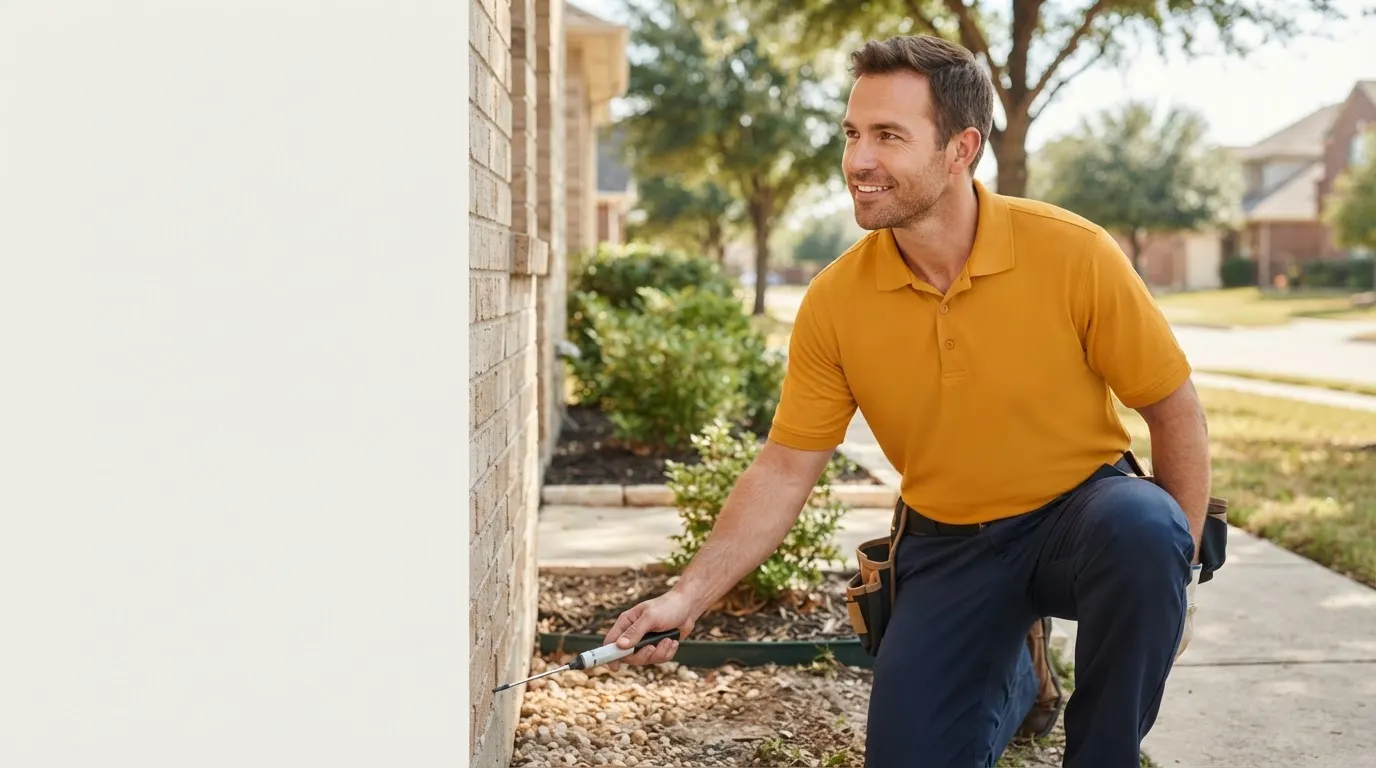
A professional Pest Control Service in Dallas is a targeted extermination, chemical soil barrier, and structural exclusion protocol engineered to decisively eliminate wood-destroying subterranean termites, disease-bearing commensal rodents, and resilient insect colonies from North Texas residential and commercial structures.
Every service reflects the same meticulous attention to detail, whether it's a single job or a larger pest control service project across Dallas.
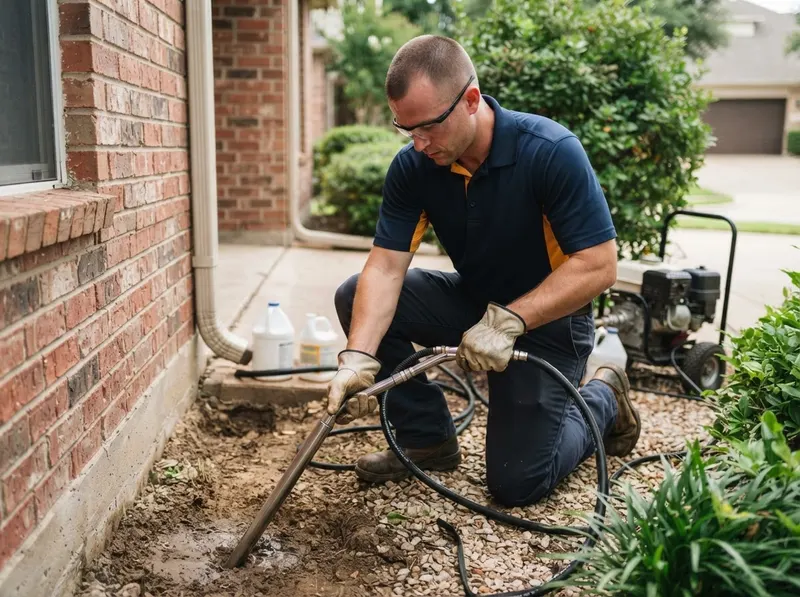
Complete perimeter foundation trenching and pressurized rod injection using EPA-registered non-repellent liquid termiticides such as fipronil. Soil application rates adhere to four gallons per ten linear feet, saturating the dense Houston black clay profile down to foundation footings. This process establishes an undetectable lethal transfer barrier where foraging workers unwittingly transport the active compound directly to subterranean reproductive queens. In addition, technicians inject expanding chemical foam into plumbing slab penetrations and hollow masonry block foundations to sever active shelter tubes, preventing subterranean insects from compromising internal structural wood framing and drywall surfaces.
Get a quote →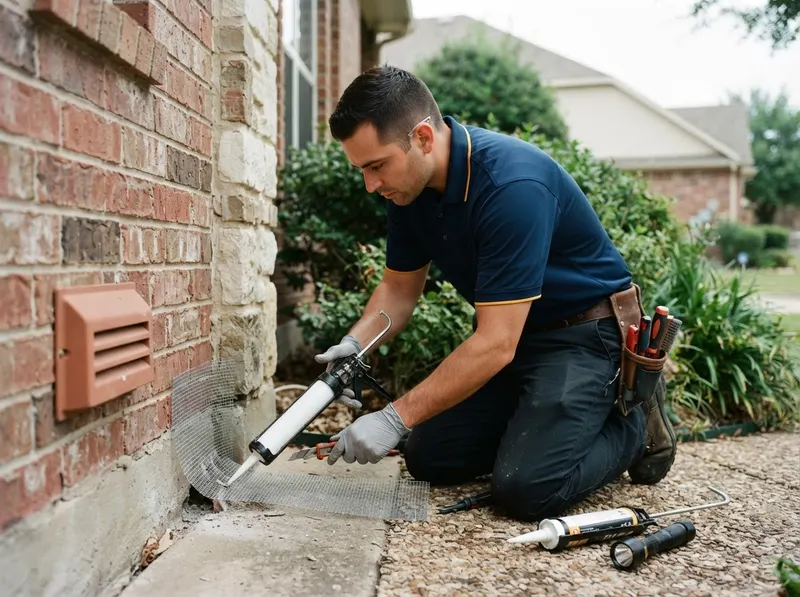
Structural architectural sealing and active interior removal protocols designed specifically for roof rats (Rattus rattus) and house mice (Mus musculus). Service commences with a thorough multi-point exterior assessment checking roof transitions, fascia gaps, gable vents, air-conditioning chase pipes, and foundation weep holes. Technicians physically seal all apertures exceeding 0.25 inches utilizing galvanized 23-gauge steel hardware cloth, elastomeric caulking, and metal flashing to halt gnawing breaches. Inside attic and crawlspace zones, technicians position commercial-grade, tamper-resistant mechanical trapping stations along active travel runs, avoiding rodenticides inside living envelopes to eliminate structural carcass decomposition.
Get a quote →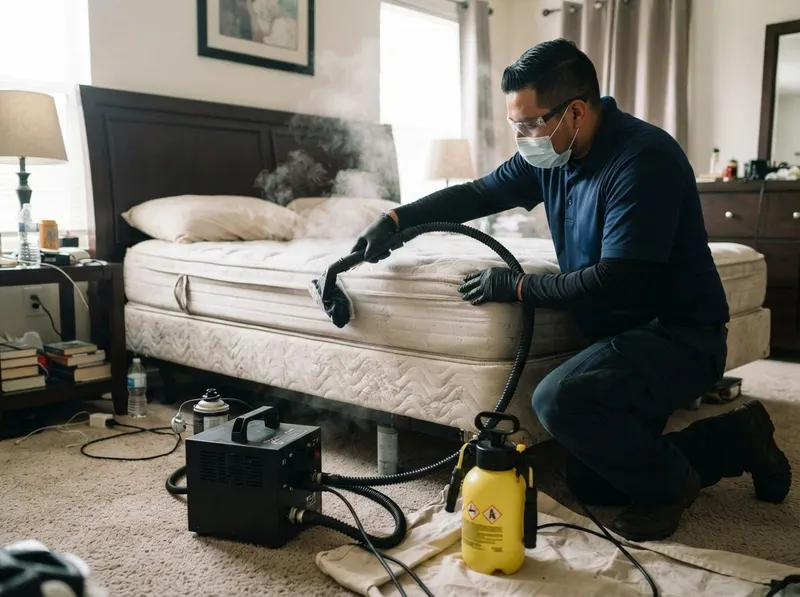
A coordinated, dual-phase eradication strategy combining high-output structural thermal remediation with precision chemical residual dusts. Industrial mobile heating units elevate ambient indoor temperatures to a lethal threshold between 125°F and 135°F, maintaining that temperature for a minimum four-hour duration to penetrate mattress cores, upholstered furniture frames, baseboards, and structural wall voids. This sustained heat desiccates all life stages, including heat-resistant egg chorions. Technicians reinforce this thermal protocol by applying long-lasting amorphous silica dust inside electrical switch plates, wall base tracks, and door frames, establishing lasting residual protection against reintroduced specimens.
Get a quote →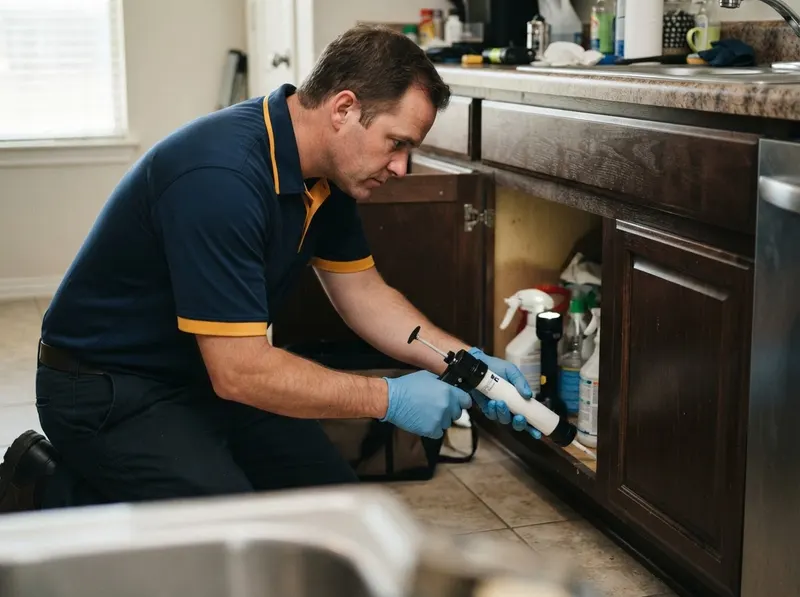
A multi-tiered eradication service targeted at high-density German cockroach (Blattella germanica) harborages within food preparation areas, commercial galley spaces, and residential utility rooms. The protocol avoids repellent aerosol dispersal, instead deploying precision micro-doses of non-volatile stomach poison baits containing indoxacarb or dinotefuran in hidden cabinet hinges, undersides of counters, and refrigerator motor compartments. Technicians combine these bait applications with high-potency insect growth regulators such as pyriproxyfen, which inhibit chitin synthesis during nymphal molting cycles. Follow-up visits at fourteen-day intervals target freshly emerged nymphs to break the reproductive cycle entirely.
Get a quote →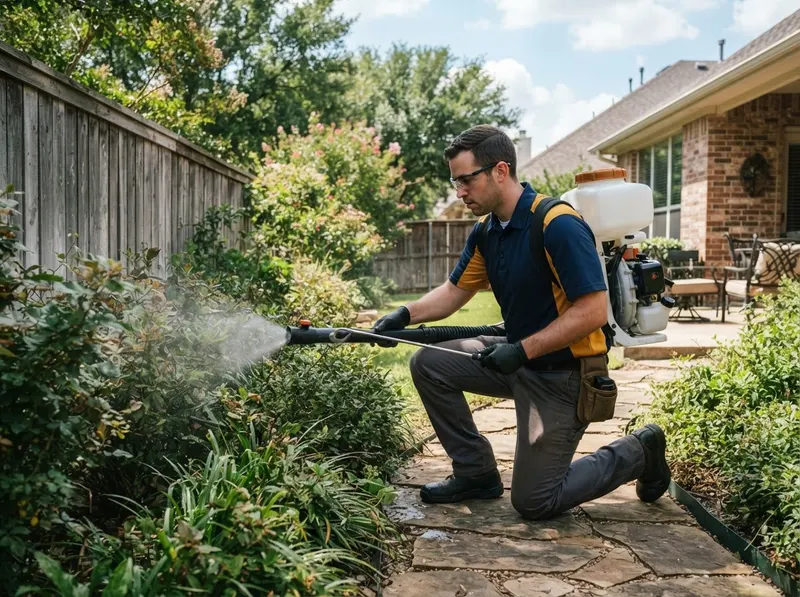
Targeted seasonal barrier sprays and biological control treatments deployed across exterior living areas, landscaped perimeters, and perimeter drainage structures. Technicians apply micro-encapsulated synthetic pyrethroids to the undersides of broadleaf shrubs, ground cover, tree canopies up to ten feet, and shaded fence lines where adult Asian tiger mosquitoes (Aedes albopictus) rest during the day. In addition, technicians treat standing water sources, French drains, and irrigation retention basins using biological Bacillus thuringiensis israelensis (BTI) briquettes, destroying aquatic mosquito larvae within twenty-four hours before they develop into airborne biting adults.
Get a quote →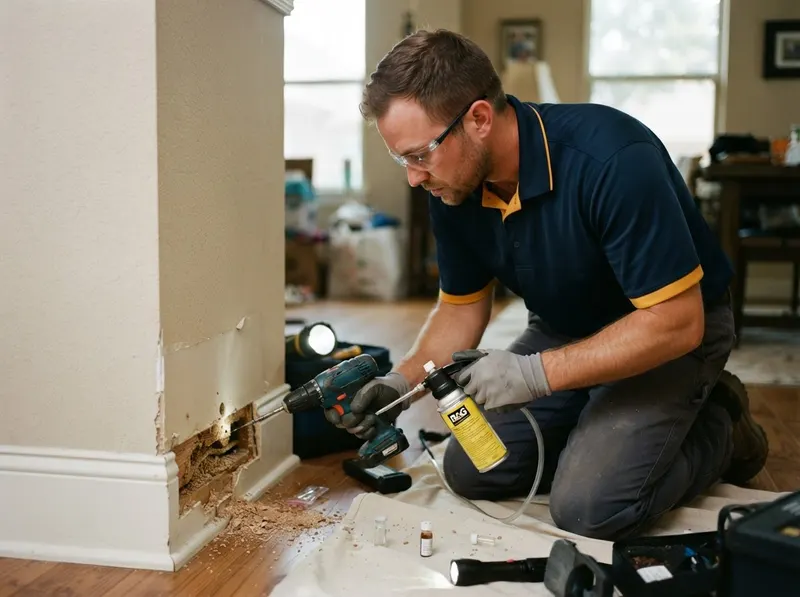
Systematic location and localized extraction of parent and satellite carpenter ant (Camponotus pennsylvanicus) colonies nesting within structural timbers. Rather than performing invasive wall demolition, technicians track worker trails along moisture lines, foundation edges, and roof valleys to discover excavation sites marked by structural frass deposits. Treatment utilizes non-repellent liquid transfers and target-specific carbohydrate- and protein-based matrix baits. Foraging ants carry these delayed-action chemical baits deep into satellite nests hidden behind shower walls, window frames, and chimney flashings, eliminating the central reproductive brood without widespread destruction of finished surfaces.
Get a quote →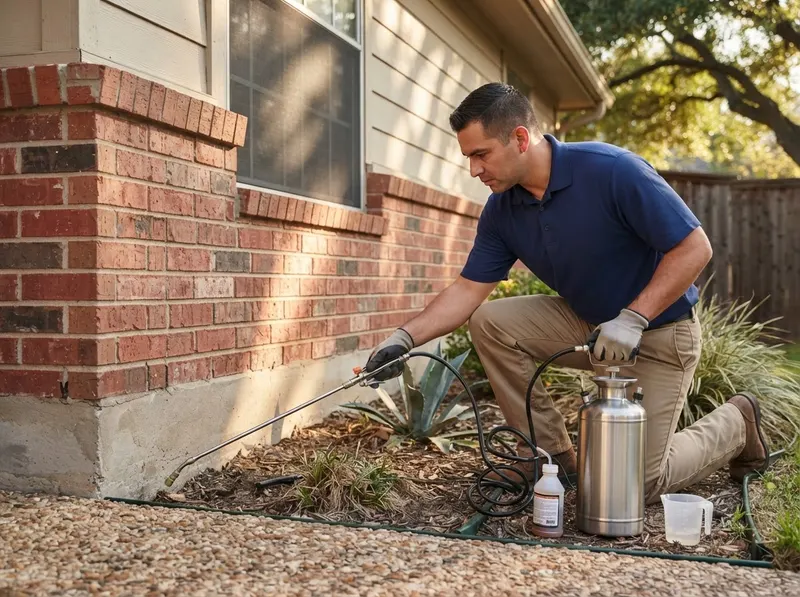
Heavy-duty exterior barrier treatments engineered to eliminate striped bark scorpions (Centruroides vittatus), black widows, and brown recluse spiders. Technicians apply concentrated, UV-stable micro-encapsulated insecticides in a continuous band extending three feet upward along the foundation wall and six feet outward across surrounding landscape beds. The treatment seals entry vectors around weep holes with copper mesh sleeves and injects pyrethroid dust into exterior brick veneers, window wells, and electrical boxes, neutralizing arachnids and their primary insect prey before they migrate across door thresholds.
Get a quote →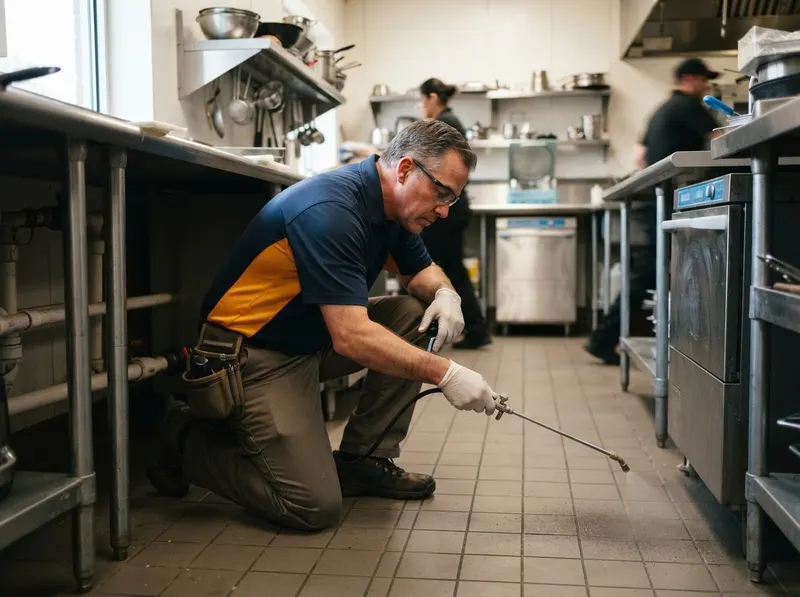
Specialized pest suppression programs engineered to maintain compliance with municipal sanitation codes across Dallas restaurants, commercial kitchens, and food distribution warehouses. The operational scope tackles persistent populations of drain flies, fruit flies, red flour beetles, and American cockroaches. Technicians apply bio-enzymatic foam formulations directly into floor drain traps to break down organic fats and scum layers where flies breed, while installing discreet wall-mounted insect light traps and structural pheromone monitoring stations in food storage areas to catch pest introductions before inventory loss occurs.
Get a quote →You get a firm, itemized quote for your pest control service before any work begins, no surprises, no pressure.
Careful prep, tidy work, and a full cleanup when we are done. We treat your home and belongings like our own.
The same trusted, background-checked team from the first call to the final check.
Navigating insect and rodent remediation across North Texas demands aligning mechanical, biological, and chemical methodologies directly with building architecture and targeted species behavior. Property owners confronting active subterranean termite activity within structural framing must choose between localized non-repellent liquid termiticide perimeter trenching and exterior slow-release baiting matrices. If an active infestation threatens load-bearing studs or subflooring, choose continuous perimeter liquid soil trenching supplemented by direct interior wall void foaming; if the objective is non-invasive long-term property monitoring without drilling interior slabs or disturbing perimeter landscaping, choose an exterior bait station array installed at ten-foot intervals.
The operational trade-off centers on response velocity versus ongoing monitoring obligations: liquid termiticide trenching establishes an immediate, continuous, lethal transfer zone within native soils that neutralizes foraging workers over several weeks, whereas baiting systems require scheduled quarterly station checks and consumption verification before the insect growth regulators achieve complete colony collapse. When managing severe German cockroach infestations within residential kitchens, property managers must weigh intensive insect growth regulator and gel baiting cleanout protocols against broad-spectrum synthetic pyrethroid aerosol space spraying. Choose precision baiting matrices composed of hydramethylnon or indoxacarb placed within structural cabinetry hinges, appliance motor housings, and utility access points; avoid broad-spectrum broadcast foggers.
The trade-off directly impacts reproductive eradication: broadcast aerosol fogging generates swift cosmetic knockdown of exposed insects but repels reproductive females deeper into inaccessible wall cavities, worsening structural infestation density, whereas targeted gel baits allow poisoned roaches to return to harborages, transferring lethal active ingredients to nymphs via coprophagy and necrophagy. For exterior biting mosquito suppression across properties bordering Lake Highlands or Lakewood creeks, choose scheduled direct foliage misting targeting shaded broadleaf vegetation combined with granular larvicide briquettes in standing drainage systems, rather than whole-yard automatic perimeter misting systems or passive ultrasonic deterrents. Foliage residual applications bind micro-encapsulated active ingredients to the undersides of leaves where adult mosquitoes shelter during high daytime heat, providing steady population reduction for 21 to 30 days; automated misting lines deliver immediate perimeter knockdown but risk rapid chemical degradation from sun exposure, wind drift, and unselective neutralization of beneficial predatory insects.
In addressing rodent intrusions, selecting mechanical exclusion backed by heavy-gauge steel mesh and interior snap-trapping represents the only durable strategy compared to exterior rodenticide bait boxes alone. Exterior tamper-resistant bait stations suppress local foraging population numbers outside the structure; however, relying solely on rodenticides without physical structural exclusion permits poisoned roof rats to retreat inside wall voids or attic insulation, producing severe decomposition odors and insect secondary infestations. 25 inches across roof returns, soffits, and weep screeds, but completely prevents structural re-entry.
Every project gets a firm, written price after a free on-site visit. Ranges below for orientation.
Tell us about your pest control service job and we'll send a clear, written quote, usually the same day. Or just call and talk to a real Dallas pro.
(945) 410-2468
Dallas residential and commercial structures face persistent, severe environmental pest pressures dictated by regional geology and hydrology. The foundation of Dallas County rests upon expansive Houston black clay, a vertisol soil type characterized by drastic shrink-swell cycles. During hot, dry summer months, this clay contracts substantially, opening vertical fissures up to four inches wide and several feet deep. These structural earth cracks offer direct subterranean avenues for Eastern subterranean termites (Reticulitermes flavipes) to bypass traditional surface treatments and reach concrete slab expansion joints, grade beams, and plumbing penetrations beneath homes. In historic neighborhoods like Lakewood, Kessler Park, and East Dallas, architectural charm introduces vulnerability: brick-veneer and pier-and-beam residences often retain open, unmeshed weep holes at ground level, giving American cockroaches, silverfish, and scorpions unrestricted access directly into structural wall cavities. Additionally, in heavily wooded communities such as Preston Hollow and Lake Highlands, mature post oaks, pecan trees, and live oaks extend massive canopy branches directly over rooflines. These arboreal bridges allow nocturnal roof rats migrating from the Trinity River greenbelt and White Rock Lake tributaries to easily bypass ground-level defenses. Once on the roof, they exploit gable louvers, lead plumbing flashing, and unfastened soffits to establish nests within conditioned attic insulation. Commercial and mixed-use structures in Uptown and the Bishop Arts District confront dense underground utility chases and interconnected sewage lines, providing stable year-round corridors for sewer roaches and Norway rats that demand mechanical proofing alongside chemical suppression.
Free estimates for Dallas & the surrounding area.
 Black Anchor Pest Control